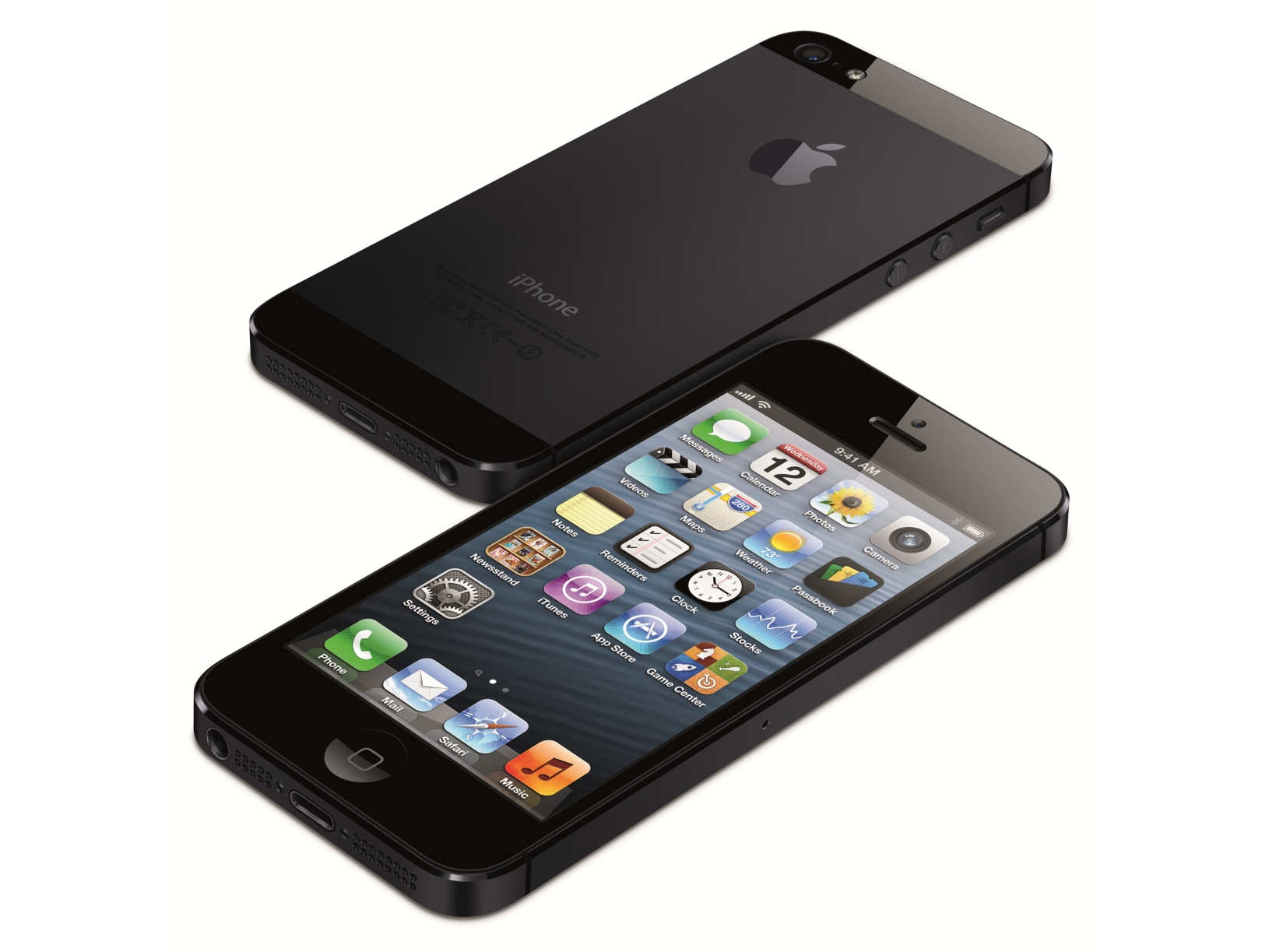
Who could ever have believed, at the time when Alexander Graham Bell invented the phone in 1876, that one day we would be walking around with so much power as this in our pockets?
The iPhone 5 isn’t simply a telephone. It’s the perfect portable address book, a peerless hand-held browser, and the handiest mobile music player rolled into one.
It’s no wonder, then, that Apple kept it under such tight wraps in the years it took to develop, and that each new model is shrouded in secrecy right through its development cycle (notwithstanding the leaks and reveals that led up to its unveiling).
The latest iOS 6 update introduced a new Maps application (although it failed to take off successfully), rationalised vouchers and tickets with Passbook, and syncs through iCloud. Here, we take a look at its most compelling features.
Web browser
Before the iPhone, the web had been presented on phones and mobile devices in three ways: Wap, RSS or its native format. The latter of these three choices, native format, in which pages were shown as they were designed yet rendered on the smaller screen, was rarely successful.
So, it must have been clear to Apple from the very first day its engineers sat down to plan the iPhone’s development that if it was to include a web browser people would actually want to use, then it would have to make something more efficient, more impressive and far more usable than anything that had gone before it.
In short, it would have to display fullsized web pages on a tiny screen in their original format in such a way that it would seem they had been designed for just that format.
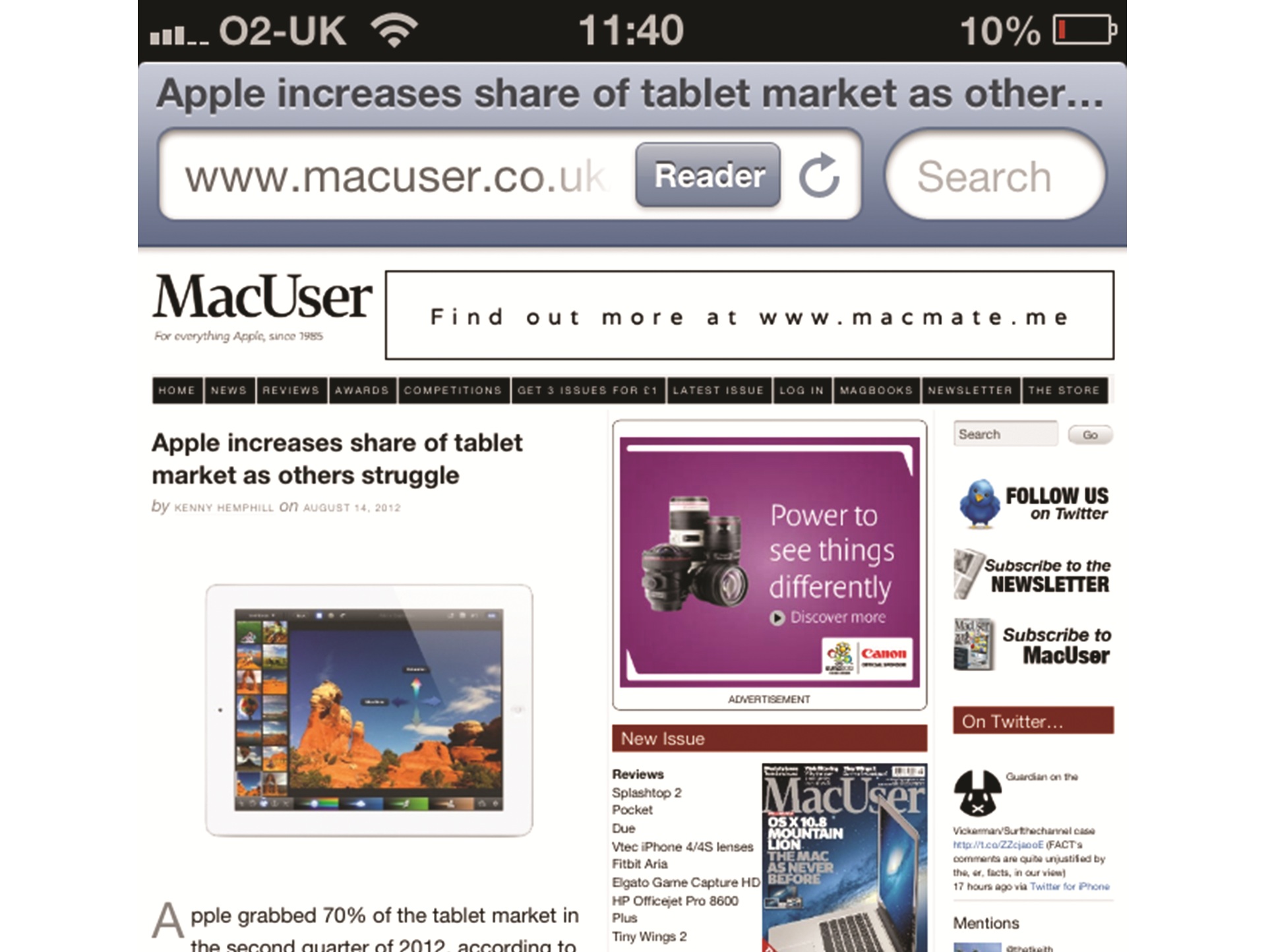
Apple achieved this in two ways. First, it gave the iPhone a truly massive resolution, so that even when shrunk down you would still be able to read headings and body text on most web pages.
This resolution was enhanced with the arrival of the iPhone 4, which adopted a retina display in which the individual pixels were too small to be detected by the naked eye. In the iPhone 5 it’s still 640 pixels wide, but now over 1000 pixels tall thanks to the larger physical screen.
Second, it let you tap to selectively zoom in and out on the sections of a page that you want to read in more detail. This has been achieved in a more intelligent way than you might imagine, as it’s not a dumb enlargement, but an accurate zoom to mazimise the screen space given to specific elements such as images or columns of text.
The result was a browser that offered the best of both worlds, taking the tried and tested piecemeal peck and pan approach of its predecessors and supplementing it with the far superior overview mode of a desktop computer that fits the whole width of a page in the window.
Email client
It’s not so long ago that the only practical way to keep up with your email on the move was to buy a BlackBerry Messenger. It took all of the responsibility for managing your mail our of your hands, delivering it as soon as it was received by the server.
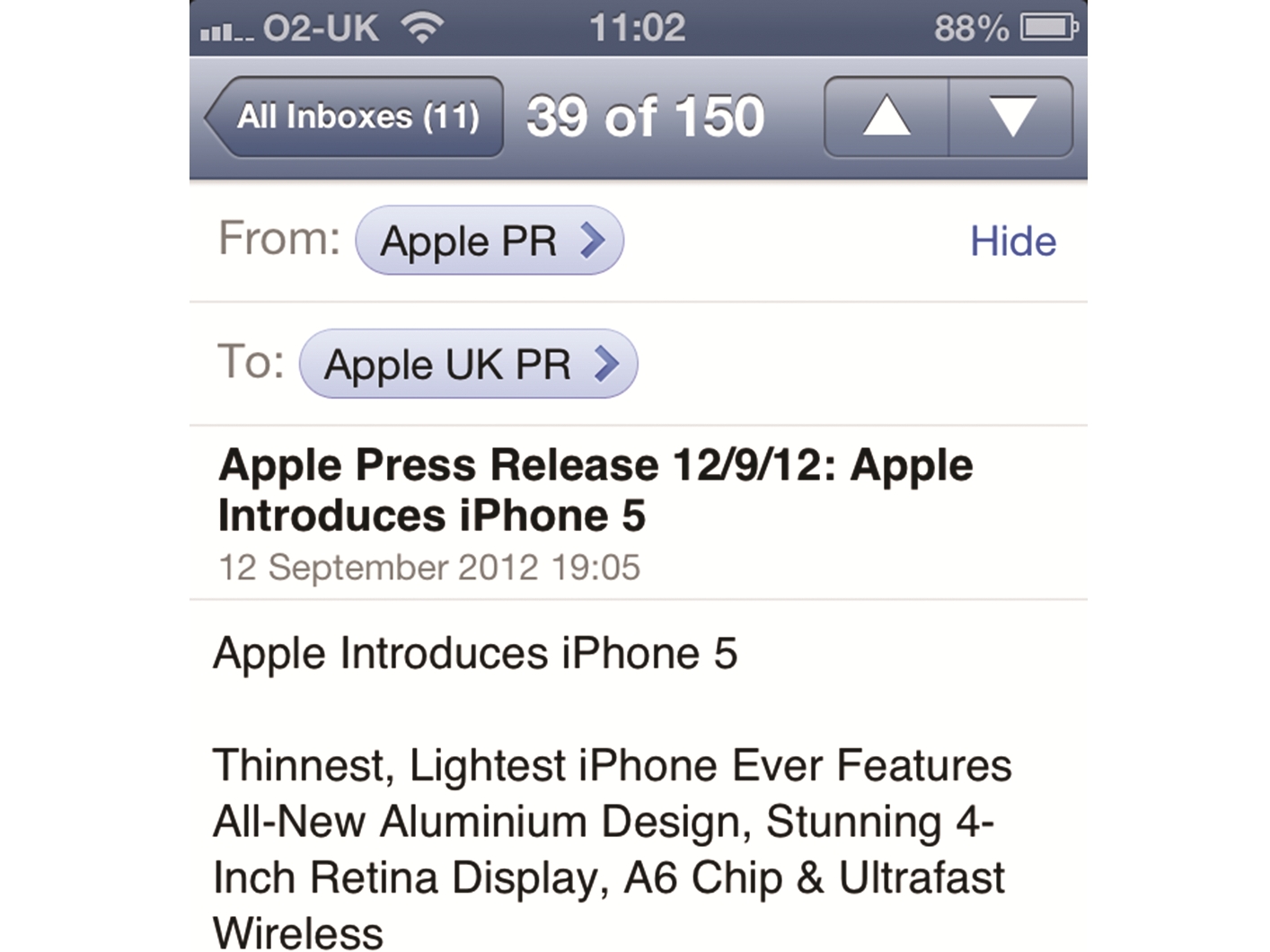
The iPhone does the same with iCloud’s @me.com addresses, and those from a range of third-party providers. What does this mean for you? Quite simply, simplicity. Push takes all the hassle out of mobile email, because the messages come to you and can be dealt with as soon and as often as you like. And because the email is stored on Apple’s servers you can access it from any device in any location. This means that any email you mark as read on your Mac or PC will also be marked as read on your iPhone, and any email you send while you’re out and about will also appear in the sent items folder on your computer.
As well as iCloud, the iPhone can connect to a host of other services including Yahoo mail, Gmail and regular Pop3 and IMAP services. For business users, it also works happily with Microsoft Exchange servers, which are common in enterprise set-ups.
It’s important to choose the most appropriate server technology for your needs. While connecting to your own Pop3 server is a simple way to use your regular email address on your iPhone, you won’t be able to synchronise the read and unread status of your messages, or have a record of those messages sent from your iPhone on your regular computer, unless you cc the same messages back to yourself.
IMAP does provide these features and for business users Exchange performs a similar function. Home users should consider hosting their domains on Google’s App servers, which let them use the company’s Gmail service under their own branding, thus benefiting from the IMAP features.
Maps
Online mapping is nothing new. We’ve had countless online street maps to choose from since the turn of the millennium. When the first iPhone appeared it used Google’s map service for navigation, but with iOS 6 Apple switched this to its own variant.
This allows you to look up local businesses and services – such as car repair shops and pizza restaurants – and call them directly using the iPhone’s telephony features. You can also set your iPhone to triangulate your position using its built-in satellite navigation features (GPS on iPhone 4, GPS / GLANOS on iPhone 4S and iPhone 5).
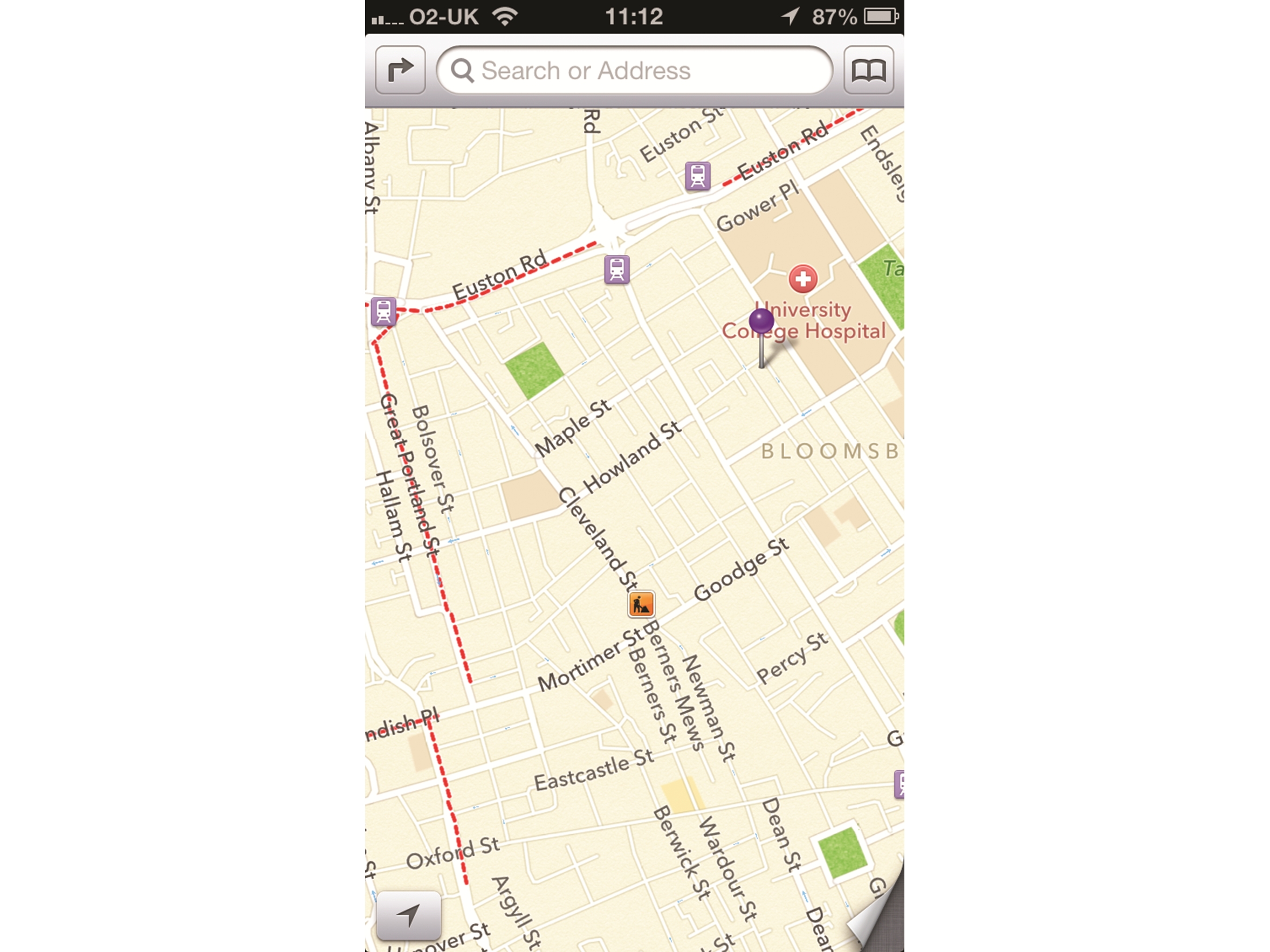
This accepts incoming positional data from a satellite network to provide more precise information, plotting your location to within a metre or so. Like the network triangulation performed by the original iPhone, its accuracy does vary depending on a range of factors, such as cloud cover and your ability to see an open sky (so it won’t work inside buildings unless you are next to a window), but the information it returns to the phone can be genuinely useful. Many applications now make use of it to provide location-based dating and games.
The old triangulation features haven’t disappeared entirely, though. If the iPhone can’t get a decent satellite fix it will use them as a fallback, and in all instances use this data to hone the satellite stream.
Camera
No phone worth its salts ships without a camera. How different that is to a decade ago when the networks were just starting to push the exciting idea of paying extortionate rates to send pictures to your friends.
Now it’s almost impossible to buy a new phone that doesn’t have a camera, and even those of us who don’t use them to send photos over the mobile network find them invaluable as digital notebooks when out shopping or spending time with family.
The first iPhone’s camera was one of the biggest surprises when Steve Jobs revealed the gadget’s final specifications. Not because it was so advanced, like everything else inside its sleek glass and metal shell, but because in that first model it was comparably conservative.
With a resolution of just two megapixels, the camera was easily outclassed by many cheaper competitors and looked like it was decided on well in advance of the iPhone actually going into production, at a time when such a pokey pixel count would have been the norm.
With the iPhone 5 we now have an eight-megapixel monster to play with, which you can focus by tapping on the screen and zoom digitally by spreading your fingers on the screen.
Photos are automatically geotagged by using the iPhone’s built-in GPS receiver to mark them with the coordinates at which they were taken. These can then be used for filing, or for presenting your images on a map. They are also understood by services like sharing site Flickr.
Contacts
The iPhone blows even the best mobile address book out of the water, with a fully fledged contact management system that can handle names, numbers, addresses and even photos. It synchronises with your Mac or PC, so that the numbers on your phone match the ones on your computer and on iCloud.
Extra fields let you tap on an email address to start writing a message, tap an address to see it plotted on a map and tap a URL to open it in Safari. Everything is tracked by Spotlight making it quick and easy to find friends and family.
Music and movie player
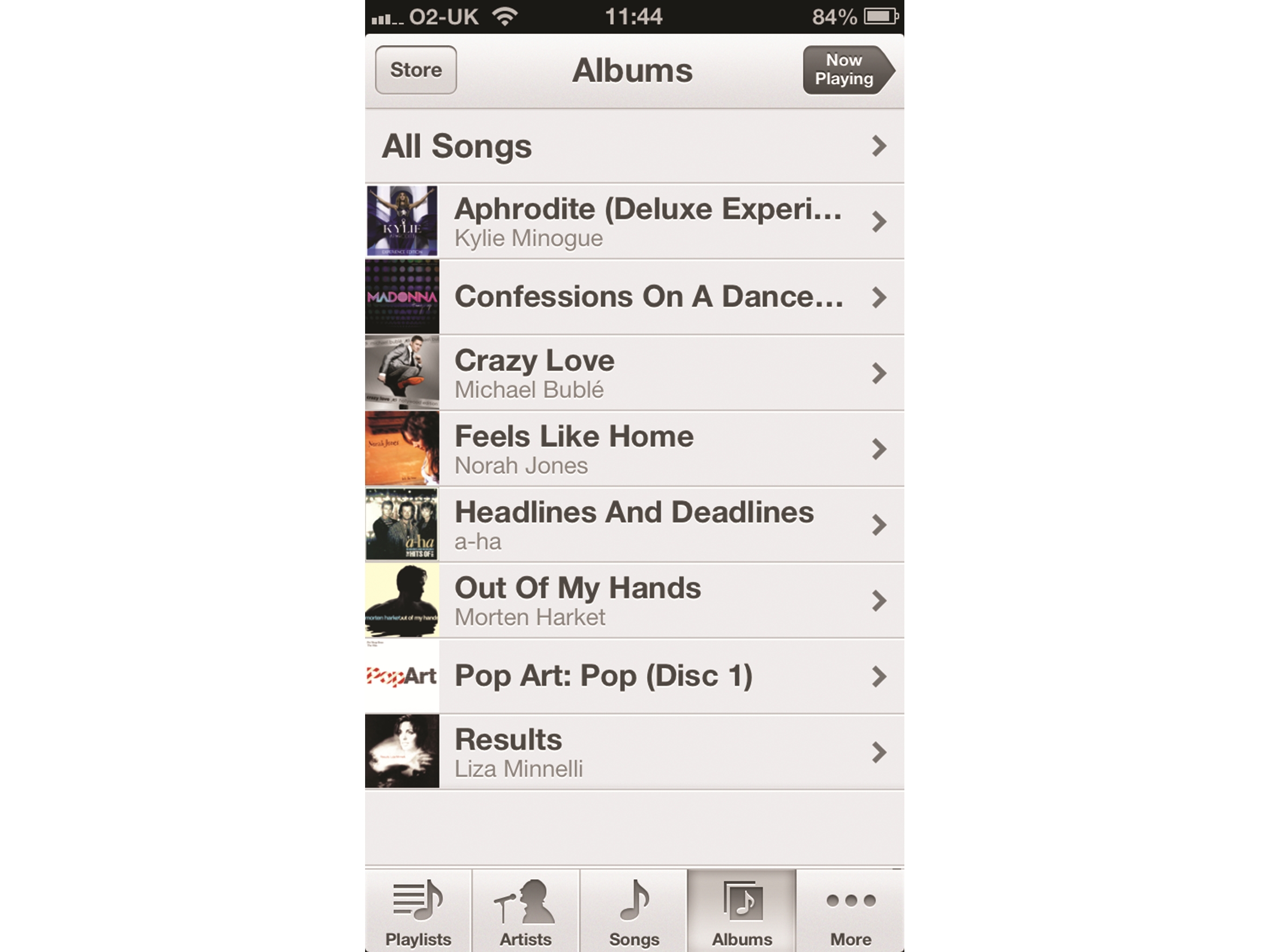
The iPhone features three key media apps. First, iTunes, which allows you to download music and videos from the iTunes Store. This media is organised by type in either Music or Videos. These do just what you’d expect, playing back your purchases and any media you have transferred from your Mac or PC.
The Music application understands the concept of playlists, allowing you to organise your music according to circumstance or play a shuffled selection.
The videos application plays your media full-screen in landscape orientation, giving you the best possible portable environment in which to catch on on movies that you don’t have time to watch at home.
Each of these applications is compatible with Apple’s AirPlay system, allowing you to play back your media on a regular television or external speakers using AirPlay hardware, such as Apple TV or AirPort Express. These represent separate purchases, but thanks to their seamless integration greatly enhance the iPhone experience.
iBooks
Apple is hoping to do the same for ebooks as it has for music, selling digital products through its own online store. Buying is quick and easy, as the store uses the same login credentials as the iTunes Store and iCloud.
Mainstream books are generally slightly cheaper than the equivalent printed volumes, and many out-of-copyright books, such as Pride and Prejudice or Emma, are free.
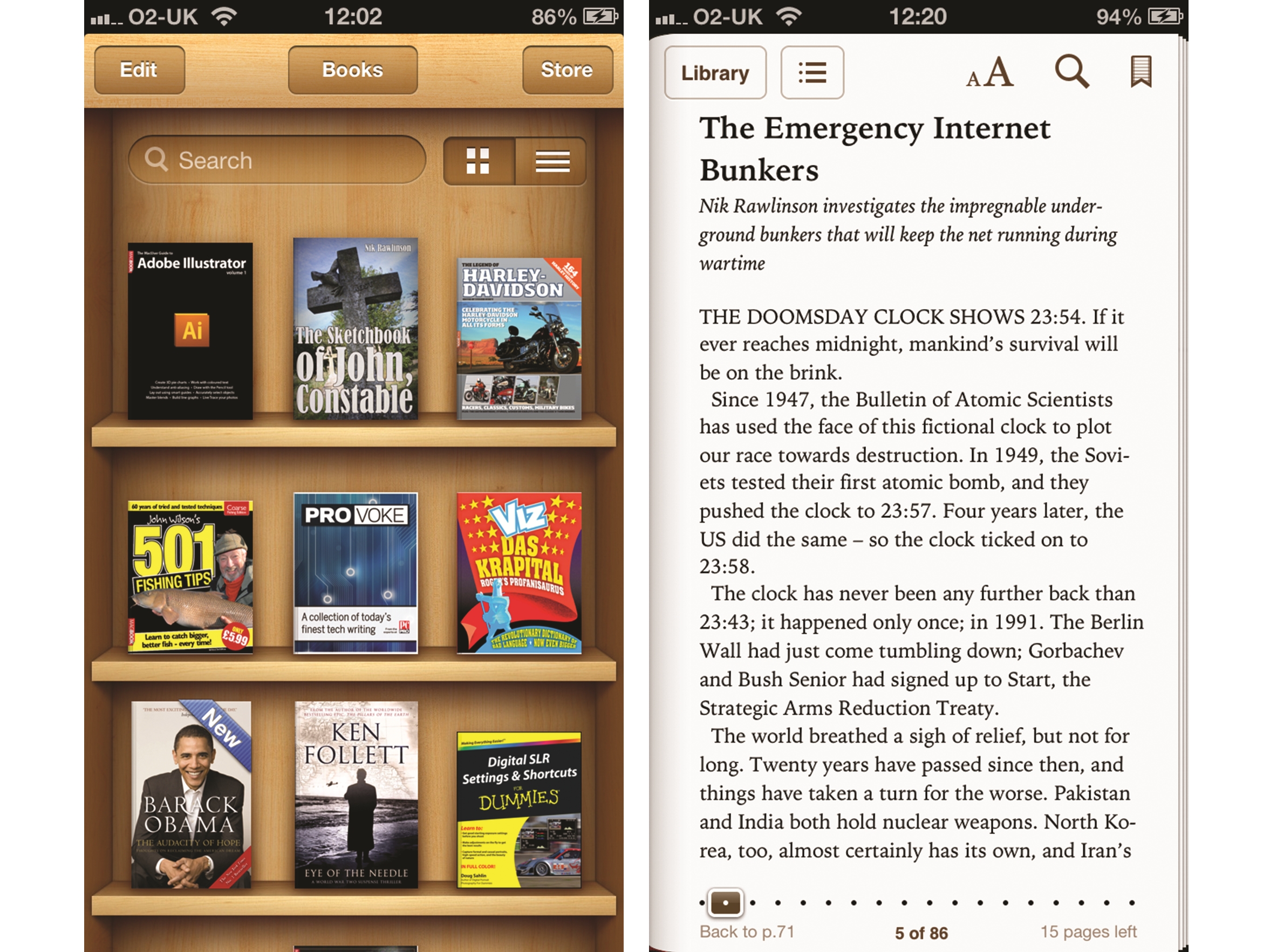
Because iBooks uses the industry standard ePub format you can download a lot of other books that don’t appear in Apple’s own store from online book repositories such as Project Gutenberg, and upload them to your iPhone through the Document Sharing pane in iTunes.
Newsstand
As well as digital books, many iPhone owners use their handsets to read magazines to which they subscribe. Although there are dedicated publishing channels, such as the Zinio news stand, many publishers prefer to publish magazines on the App Store.
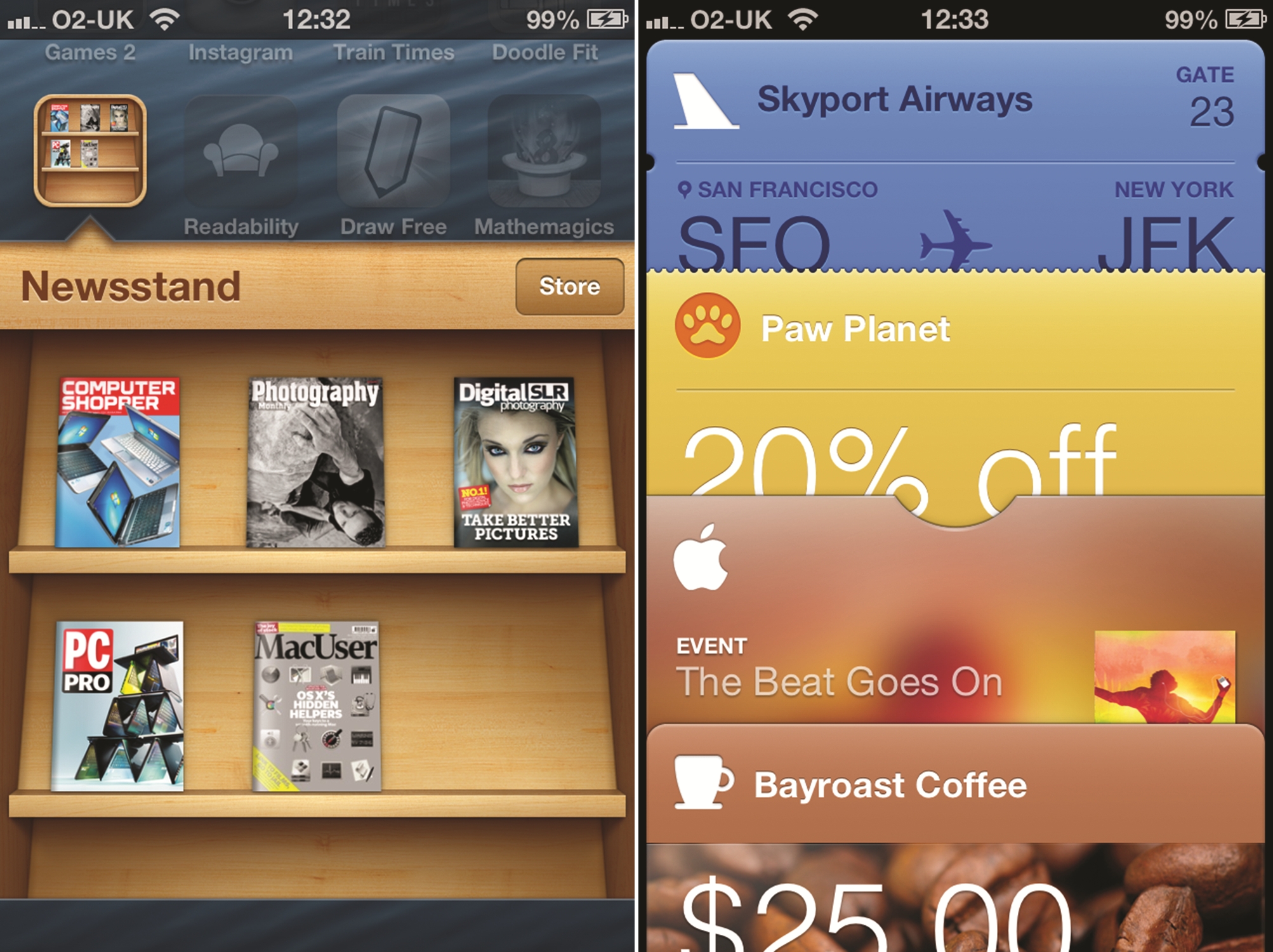
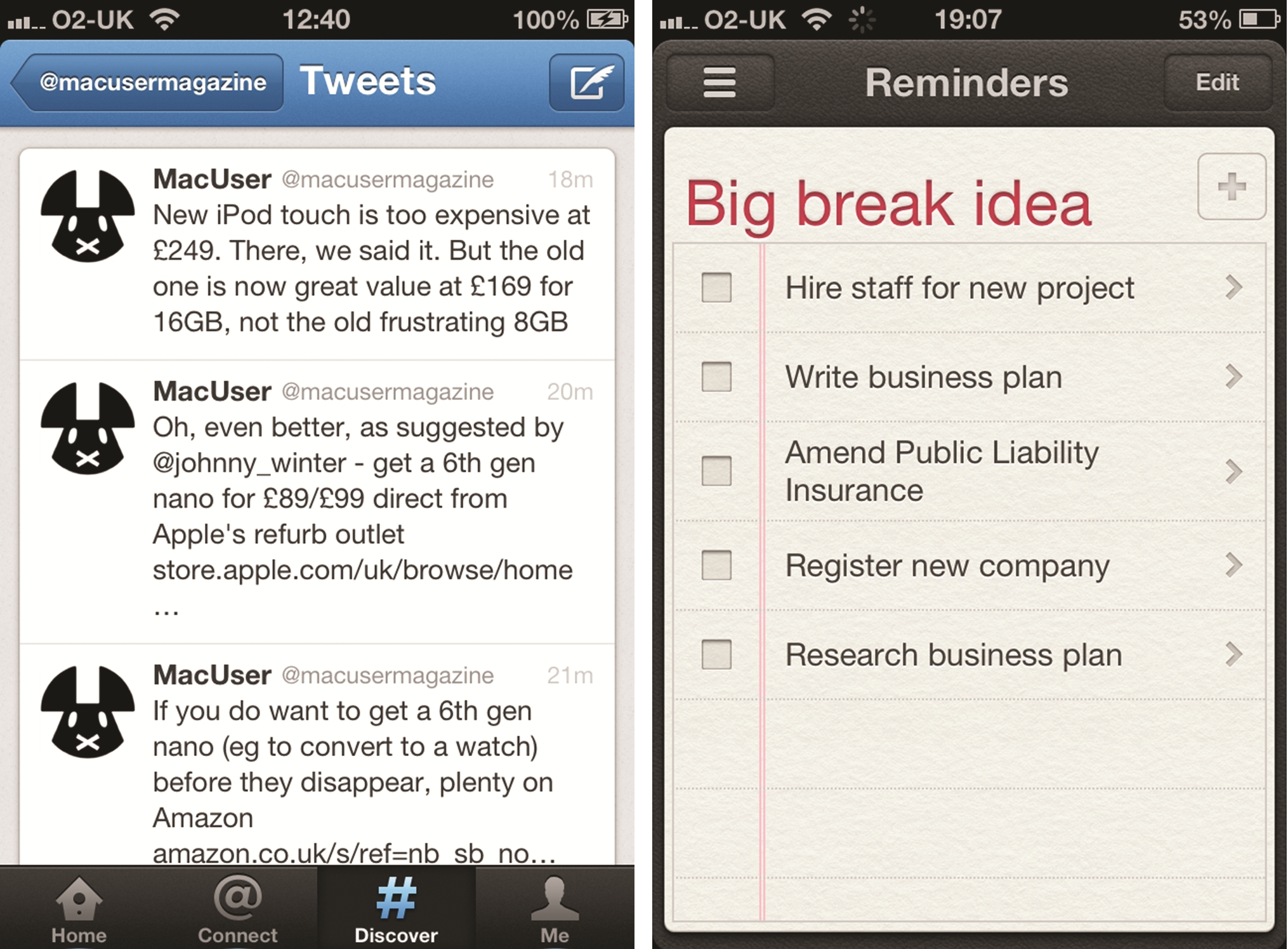
Newsstand (below left) simplifies the task of keeping your subscriptions under control and up to date, by providing one central app through which you can organise your incoming magazines, with a direct link to the store to buy new issues.
Passbook
Passbook (above right) performs a similar function to Newsstand in unifying a wide range of third-party applications into one single app. It lets you keep all of your loyalty cards, vouchers and tickets in one place so that you don’t have to have them scattered around your various home screens.
Social networking
Twitter (below left) and Facebook are both built in to iOS 6. Twitter had been a part of the iPhone since iOS 5, but Facebook integration was likely sooner or later.
By building in these social networks at the very core of its mobile operating system, Apple makes it easy to share content, including photos, with your contacts, as Facebook and Twitter appear on the sharing shortcuts built into its preinstalled applications.
The iOS Twitter and Facebook features work hand in hand with the Twitter and Facebook apps, which are free downloads from the App Store.
Reminders
Reminders (above right) is a fairly simple tool in which to track a list of jobs that need to be completed. You don’t have to tap them out in order, so can pop them in whenever they occur to you. You can then set reminders based on either an arbitrary deadline or a location.
So, if you have to make a phone call at 3pm, you’d enter that with a deadline of 15:00 hrs. Alternatively, if you knew that you needed to buy apples the next time you’re passing by the grocer’s shop, but didn’t know when that would be, you’d set a reminder based on location. Your iPhone would then use its built-in GPS receiver to track your location, and when it detected that you were near the grocer’s it would pop up a reminder that you should go in and buy your apples.
Reminders appear on screen in the middle of the display, accompanied by an audible beep (assuming you haven’t muted the speaker) and a short vibration.
iMessage
Apple has rewritten the iPhone’s default SMS application – Messages – to add a new feature called iMessage. This also works on the iPod touch and iPad, allowing you to send an unlimited number of free messages to other iOS users who have upgraded to version 5 or 6.
Each message is threaded with those that come before and after it to present an easy-to-follow conversation stream, and individual postings even appear in bubbles.

By synchronising across each device, you can leave off a conversation on your iPhone and continue later when using your iPad or Mac, if you have one.
Wifi networking
The iPhone is no dumb telephone – it has a variety of communications tools built in, with Bluetooth and wireless, or ‘wifi’, networking supplementing its range of mobile features. Wifi is the same networking protocol as that used by wireless computers, laptops, home routers and modems. It is also commonly found in workplaces and coffee shops, enabling iPhone owners to browse the web without paying high fees to the mobile networks. In the iPhone 5 it has been upgraded to 5GHz.
Bluetooth
The iPhone’s third means of wireless connectivity is Bluetooth. This is slower than wireless networking and has a shorter range, with most devices incapable of transmitting further than about 10 metres. So while technically feasible, this radio technology would never be a truly practical means of efficiently transferring large blocks of data or surfing the web. For most iPhone owners, its use will, therefore, largely be confined to transferring photos and other small chunks of data, or connecting to a wireless Bluetooth headset.
Why still use such a short-range, slow technology? Simply that it has one major benefit: widespread compatibility
So why still use such a short-range, slow technology? Simply that it has one major benefit: widespread compatibility. Bluetooth devices are able to see each other when in range and, because they have built-in ‘profiles’ that describe their features and abilities, they are able to inform each other of how they can interact. This allows for easy set-up, with little or no input from users, making Bluetooth the ideal communications technology for those of us who want things to ‘just work’. It also allows you to connect a Bluetooth keyboard so that you can more practically use office applications such as Pages, Numbers and Keynote, without having to spend all of your time tapping away on the small on-screen equivalent.
Satellite navigation
Having been absent from the first model, GPS features were long-rumoured for inclusion in an upgrade, but until the 3G arrived, nobody could be quite sure whether Apple’s engineers would have been able to integrate an upgraded communications chip (3G hardware draws more power than the 2.5G chips used in the original iPhone) with a GPS receiver. It did it, though, and has now supplemented it with GLANOS satellite reception.
With GPS features built-in, you will always know exactly where you are at any time and, as a bonus, can use your iPhone to plan routes.
By combining information data with maps drawn down from Apple’s servers, the Maps application can plot the fastest route between your current location and any other spot (or, indeed, between two locations even if you aren’t currently standing at your origin or destination). It can take traffic into account, and gives you the option of providing route details for driving, public transport or walking, with journey length and expected journey times detailed.
On-screen keyboard
The iPhone has done away with physical buttons. Apart from the power button, ringer switch, volume control and Home button, there are no external moving parts on the iPhone, as all of the other buttons have been moved into the software realm and are rendered as graphics on the touchscreen – including the regular keyboard.
This is very intelligent, and while the keys are small (how else would you fit them all onto the screen in portrait mode?), the iPhone’s touch-sensitive membrane is accurate enough to sense where your fingers are falling and magnify each button as you press it, greatly increasing most users’ accuracy.
Don’t believe us? Well, think back to the first time you started to use T9 predictive messaging. If you were anything like us, you probably spent a lot of time looking at the screen and trying to work out how you could create each word as you typed, so great was the required mind-shift in the move from picking out characters individually. Soon, though, you learned not to think about how it worked, but to just get on with things and – you know what – by the power of technology it did what you wanted, and eight times out of 10, it got the word you wanted.
Treat your iPhone’s on-screen keyboard in a similar way and you will not go far wrong. As an added bonus, because the iPhone does not have a hard-wired keyboard like a BlackBerry or a traditional non-stylus PDA, it means that Apple can quickly integrate new features, such as a wider range of languages in updated editions.
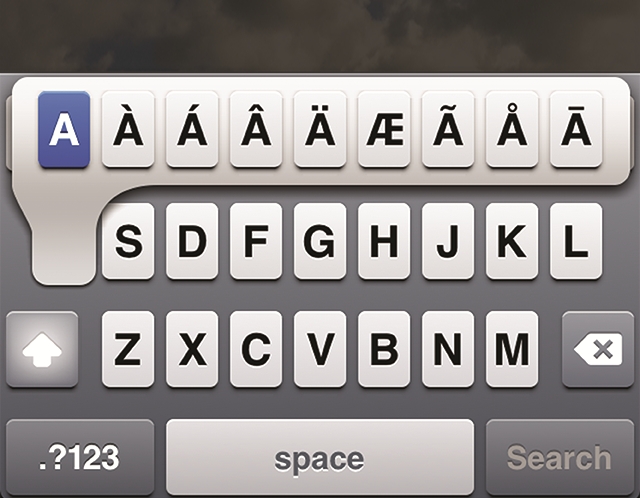
Even if you have set your language to English, you can still access a wide variety of international characters using the regular iPhone keyboard simply by holding down your finger on the character closest to the one you want. Hold for long enough and up will pop a menu of alternate, related, accented international characters for you to choose from.
Home screen
The Home screen is where you’ll find the icons and buttons that link you to every other application on your iPhone. It includes a range of information elements, such as network coverage and strength, wifi availability and remaining battery power as well as the current time. You can return to the Home screen at any time by pressing the circular button on the bottom of the iPhone’s front surface. You can also rearrange the application icons by holding down on an icon until they all start to shiver. At this point they can be dragged into their new positions.
The Home screen is where you’ll find the icons and buttons that link you to every other application on your iPhone
By dragging one icon on top of another you can group them together into a folder. This is indicated by a black box with a white rounded border that expands when you tap on it. The first time you create a folder you can change its name from the one your iPhone suggests. You can then drag other apps onto the folder icon to add them.
Phone
With so many other features, the iPhone’s actual phone component becomes something of an ‘also-ran’ tool, as it is almost crowded out by more exciting offerings such as the music player, web browser, mapping applications and the fully automated email client.
Yet there it is, sitting square and centre, and well integrated with a whole raft of other tools, including Contacts and Maps from which it can draw supplementary data. It features call holding and conference calling, which while they are also found on other mobile phones, is better built and easier to use on the iPhone than on most of its rivals.

Disclaimer: Some pages on this site may include an affiliate link. This does not effect our editorial in any way.