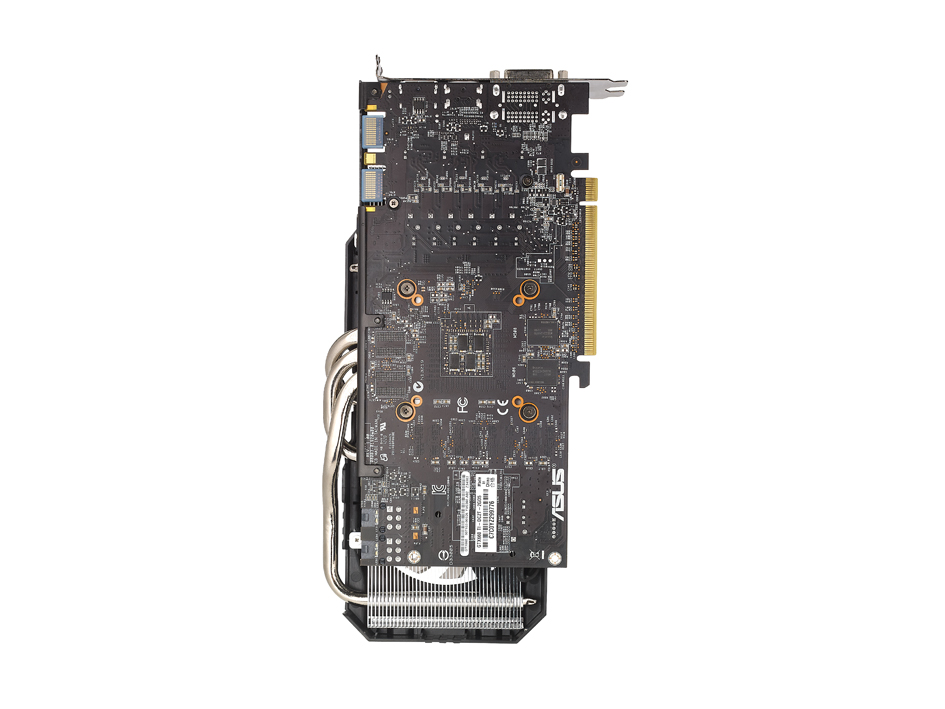
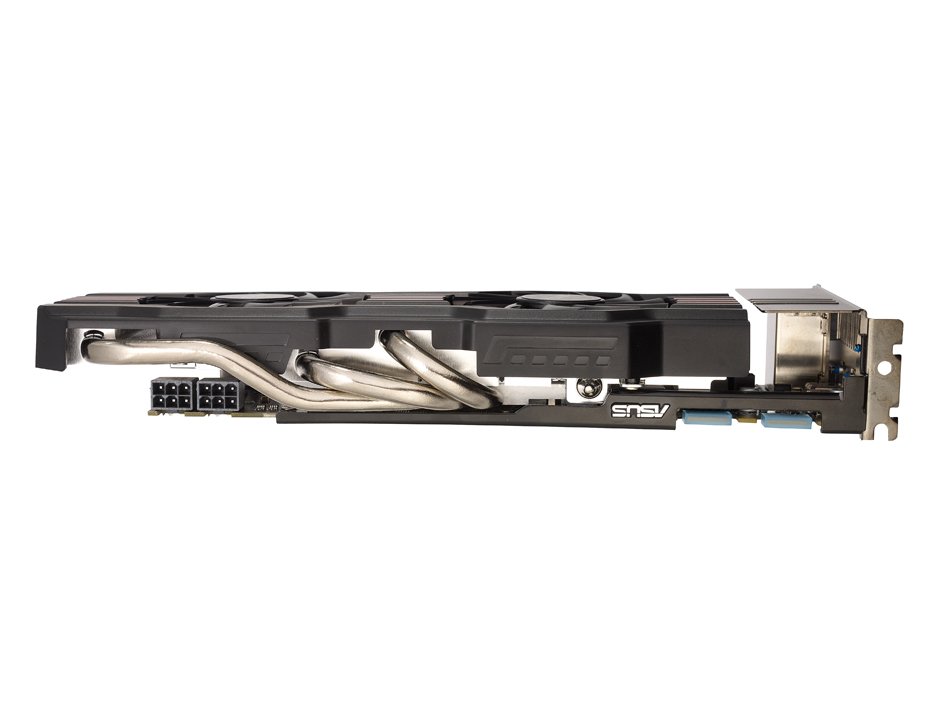
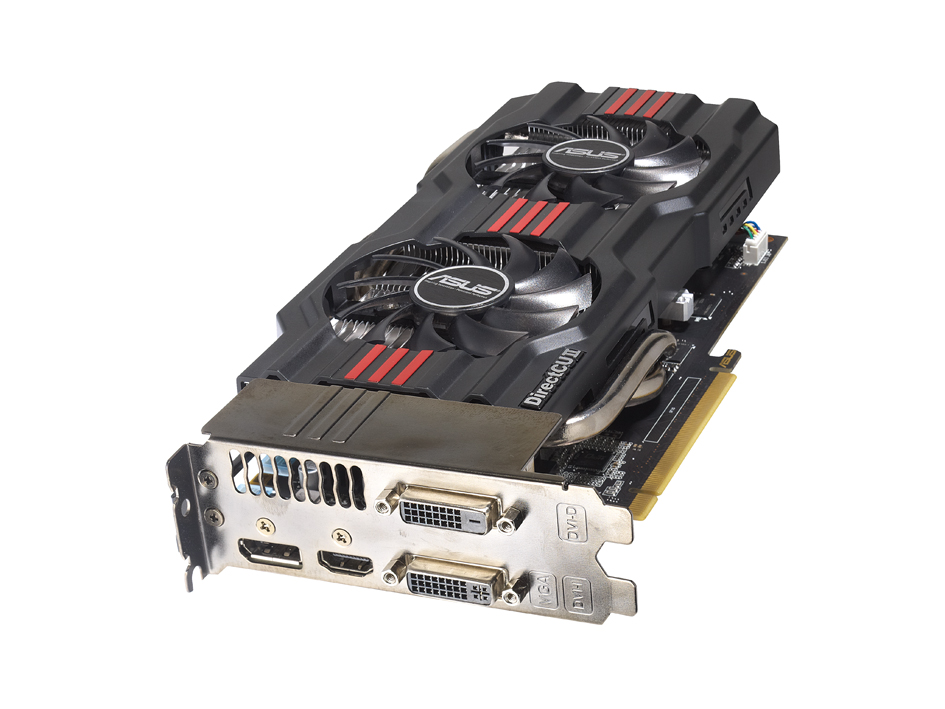
High-end cards are all well and good for the privileged few, but the real money is in the mid-range. It’s an area in which Nvidia has enjoyed significant success, thanks to its GeForce GTX 460 and GTX 560 chipsets, and its latest effort, the GTX 660 Ti, aims to continue this dominance.
Nvidia hasn’t strayed from its successful Kepler architecture to make its latest card, with the GK104 core used in the GTX 690, 680 and 670 once again pressed into service. This time, it’s the lesser of those three cards, the GTX 670, that forms the blueprint of the GTX 660 Ti.
Very little of the GTX 670’s architecture has been changed to form the GTX 660 Ti. Both cards make do with seven of the eight Graphics Processing Clusters used in the GTX 680; this means that both include 1,344 stream processors – a small step down from the 1,536 utilised in Nvidia’s top-end chip. The differences between the two cards are minor: both include 112 texture units but, while the GTX 670 used 32 Render Output Units, the GTX 660 Ti has to make do with 24 – a change that could impact on the new card’s ability to cope with demanding anti-aliasing.
Both cards include a 915MHz core clock with a maximum boost clock of 980MHz, and the 294mm[sup]2[/sup] die still includes 3.5 billion transistors. There’s 2GB of GDDR5 RAM included in the GTX 660 Ti and, like the GTX 570, it’s clocked at 6,008MHz – the most significant difference is that the GTX 660 Ti utilises a 192-bit bus rather than the 256-bit interface of the GTX 670.
The tweaked specification results in reasonable theoretical throughput figures: the GTX 660 Ti’s total memory bandwidth of 144.2GB/sec is lower than the 192.2GB/sec of the GTX 670, but its texture filtering rate of 102.5GT/sec is equal to that of Nvidia’s higher-end card.
Those figures would have trounced its main rival, too, but AMD has been busy tweaking its Radeon HD 7950 in the run-up to the GTX 660 Ti’s launch; a new BIOS update sees its clock speed boosted from 800MHz to 925MHz. That bumps its theoretical throughput figures up to 240GB/sec and 103.6GT/sec respectively.

There was precious little to choose between AMD and Nvidia in our Very High quality Crysis test, with the GTX 660 Ti scoring 66fps and the AMD HD 7950 falling two frames behind. The gap widened in the same test at 2,560 x 1,440, with the GTX 660 Ti’s 48fps score leaping six frames ahead of its rival. The roles were reversed when we hooked up three screens – at 5,760 x 1,080, the recent BIOS update helped the Radeon to score 35fps compared to the GTX 660 Ti’s 26fps.
There was little between the cards in Crysis 2. The GTX 660 Ti scored 54fps in the Extreme quality benchmark run at 1,920 x 1,080 – only one frame faster than its AMD rival. At the higher resolution and Extreme settings, both chips scored 30fps, and the Radeon only marginally pulled ahead across three screens: its 30fps result at High quality settings was two frames more than the GTX 660 Ti could manage.

Competition was fierce in the Just Cause 2 test. The GTX 660 Ti managed 110fps in the 1,920 x 1,080 Very High benchmark, 9fps more than the Radeon, both scored 73fps in the 2,560 x 1,440 Very High test. Both cards returned playable scores across three screens; the GTX 660 Ti scored 43fps with 4x anti-aliasing, while AMD fell back with 39fps.
Our final gaming test, DiRT 3, saw the GTX 660 Ti card take the lead. At 1,920 x 1,080 and with Ultra settings, its 114fps result trounced the 87fps of the Radeon, and it continued the rout at 2,560 x 1,440, where it scored 73fps compared to the HD 7950’s 61fps. The gap was just as wide across three monitors, with the GTX 660 Ti card scoring 47fps and the Radeon bringing up the rear with 39fps.
The GTX 660 Ti’s performance is married with impressive efficiency. Under load, it pulled 251W from the mains, which is only 5W more than AMD’s HD 7950. A peak temperature of 74˚C is nothing to worry about, and it’s exceptionally quiet, which is a far cry from the whirr emitted from our AMD sample when it ran more demanding benchmarks.

The final piece of the puzzle is value for money, and in this regard the GTX 660 Ti remains competitive. Our Asus model costs £281 inc VAT, and similar cards from Zotac and MSI will cost £260 inc VAT and £250 inc VAT. Prices will vary depending on the overclock and other features included, but that bodes well for competing with the Radeon HD 7950, with AMD chips costing anywhere between £250 and £300.
Performance is very close, although we’d say the Nvidia card nudges ahead here, too. The GTX 660 Ti betters the HD 7950 convincingly in Just Cause 2 and DiRT 3, and is a little faster in Crysis; it wasn’t until we fired up Crysis 2 that the Radeon HD 7950 managed to turn the tables.
Overall, it’s an easy decision. Nvidia’s GTX 660 Ti is faster, available for comparable prices and runs more quietly, too. AMD’s last-minute BIOS tweaks mean that the Radeon HD 7950 is in close contention, but in the mid-range battleground, the GTX 660 Ti just edges ahead as the new champion.
Core Specifications | |
|---|---|
| Graphics card interface | PCI Express 3.0 |
| Cooling type | Active |
| Graphics chipset | Nvidia GeForce GTX 660 Ti |
| Core GPU frequency | 915MHz |
| RAM capacity | 2.00GB |
| Memory type | GDDR5 |
Standards and compatibility | |
| DirectX version support | 11.0 |
| Shader model support | 5.0 |
Connectors | |
| DVI-I outputs | 2 |
| DVI-D outputs | 0 |
| VGA (D-SUB) outputs | 0 |
| S-Video outputs | 0 |
| HDMI outputs | 1 |
| 7-pin TV outputs | 0 |
| Graphics card power connectors | 2 x 6-pin |
Benchmarks | |
| 3D performance (crysis) low settings | 187fps |
| 3D performance (crysis), medium settings | 128fps |
| 3D performance (crysis) high settings | 101fps |

Disclaimer: Some pages on this site may include an affiliate link. This does not effect our editorial in any way.