
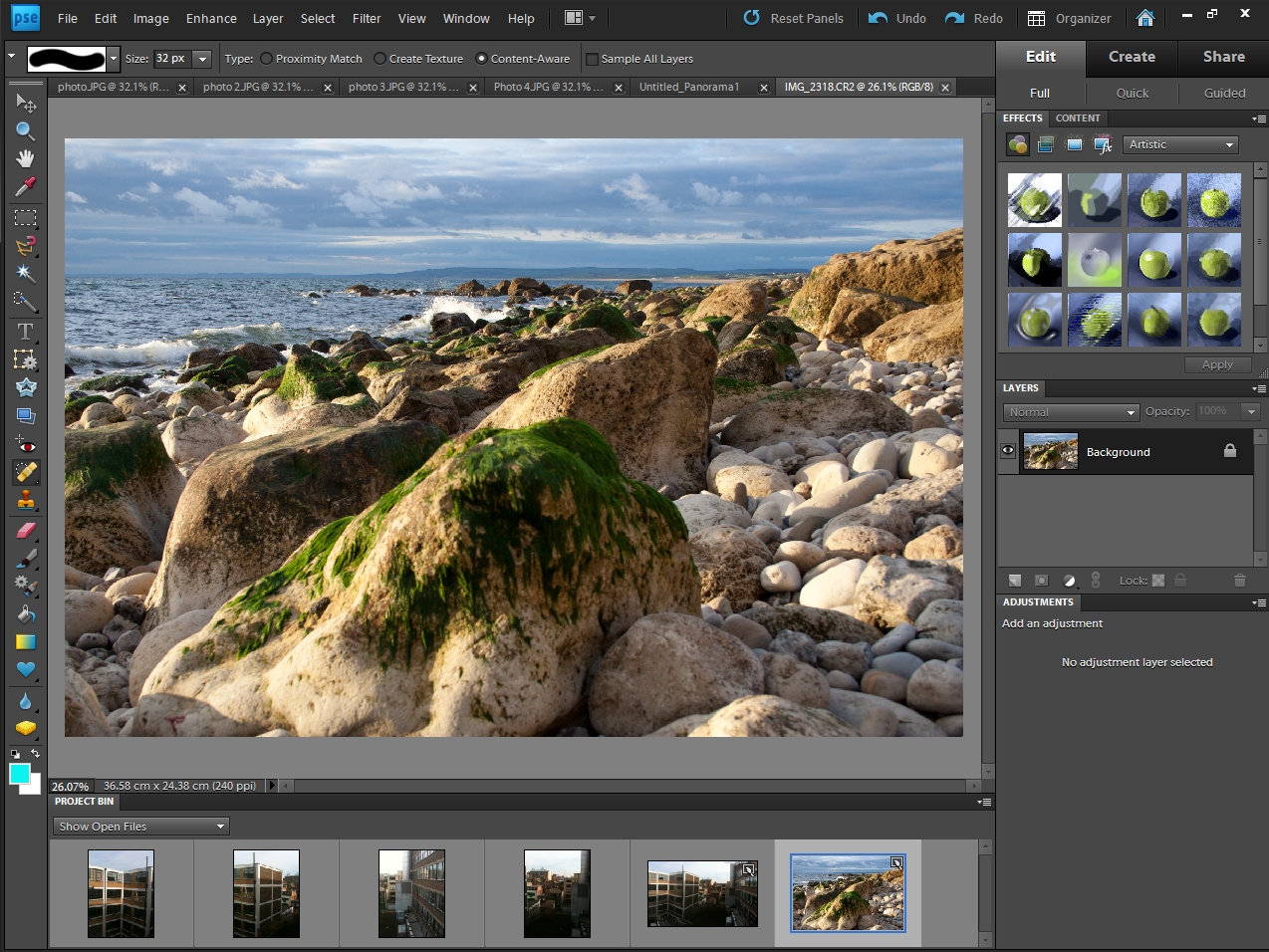
With rivals such as Google churning out the perfectly respectable Picasa for free, Adobe has to work hard to convince consumers to part with nigh-on £80 inc VAT for Photoshop Elements. Borrowing flagship features from the £650 Photoshop CS5 suite is a pretty bold means of persuasion.
Blogs
Click here to see more screenshots of Photoshop Elements 9’s new features in our first-look review
Content-aware fill was the standout new feature in this year’s CS5 refresh, so it comes as a welcome shock to find it in Elements so soon, albeit in a less powerful form. For those unfamiliar with content-aware fill, it’s a means of removing unwanted objects from photos, with Photoshop analysing the surrounding area and filling the gap.
In Photoshop Elements, content-aware fill is added to the healing brush. That means you can’t draw neat selections around errant objects as you can in CS5, but instead have to dab away at interlopers or that portrait-ruining tree branch, which is a good deal less precise. Nevertheless, the results are often stunning. Random skiiers ruining a group shot on the slopes and fingers obscuring faces in portraits were among the objects near seamlessly removed in our tests.
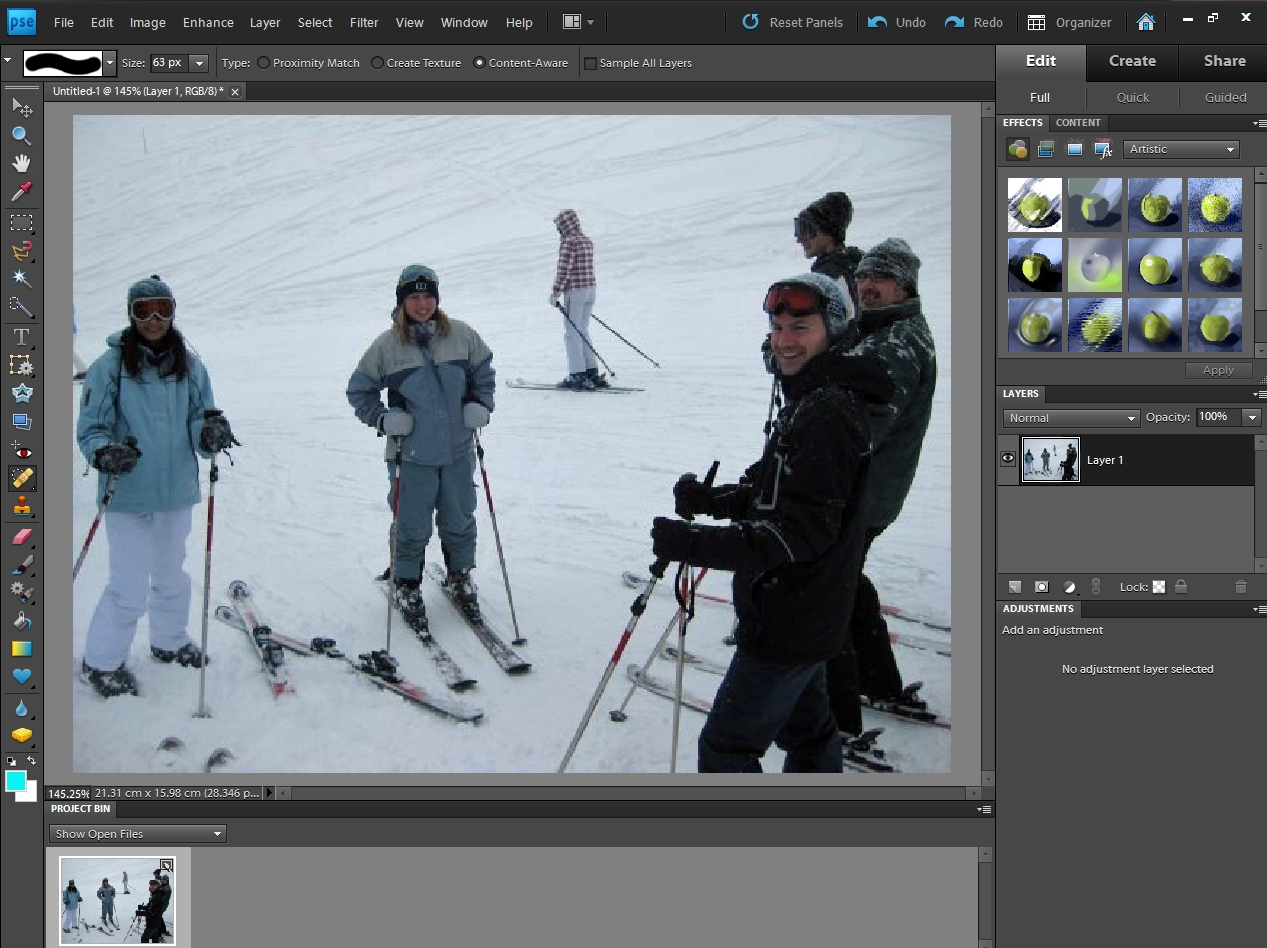
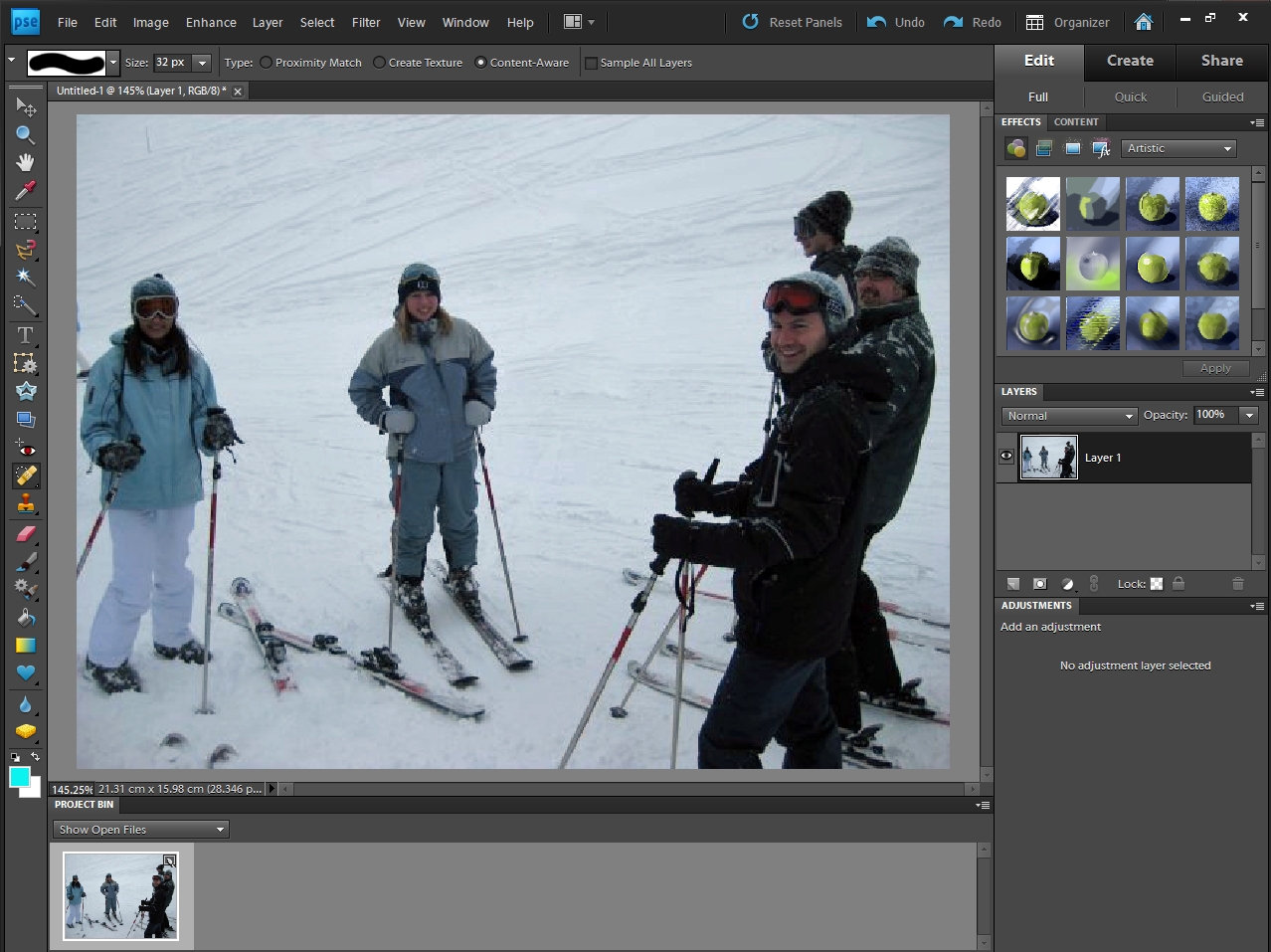
It’s no magic bullet. Attempting to extract people standing in front of complex backgrounds (such as a finely detailed building), or remove large objects in the foreground will normally result in abject failure. However, a little experimentation with different brush sizes is often all that’s needed to correct a failed first attempt.
It’s also far more efficient than fiddling with the clone tool to remove unwanted objects, as well as a boon for casual photographers who think the clone tool is something the Daily Mail gets angry about.
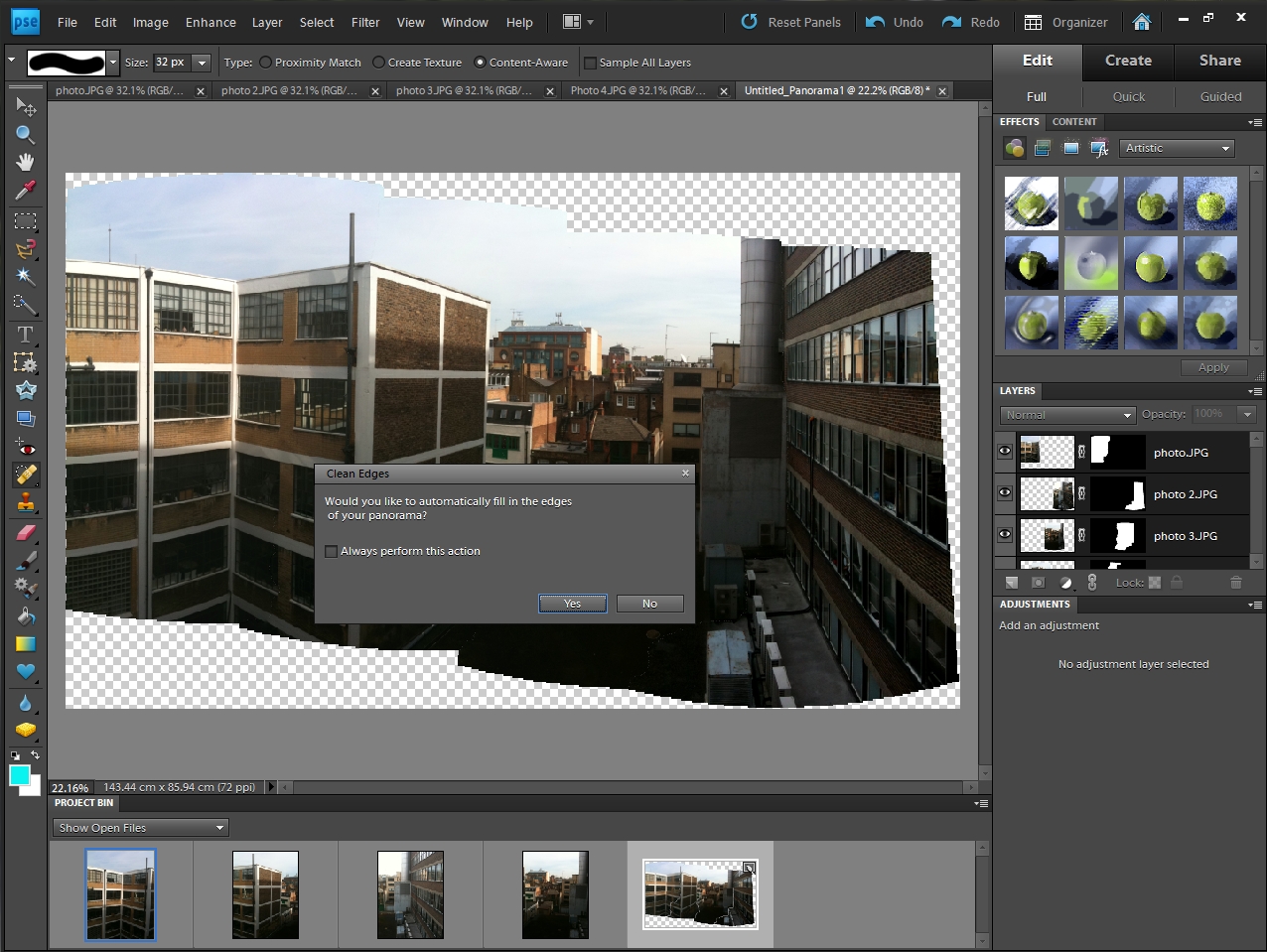
Content-aware fill is also put to good use in Element’s panorama-stitching facility. The software steps in if you fail to leave enough overlap between different shots in your panorama, and to fill in the ragged gaps around the edges. Again, the type of shot is key. The software copes admirably with sweeping panoramas of an uncluttered beach, but our test on an inner-city skyline found the software trying to add an awkward-looking extra floor to a building.
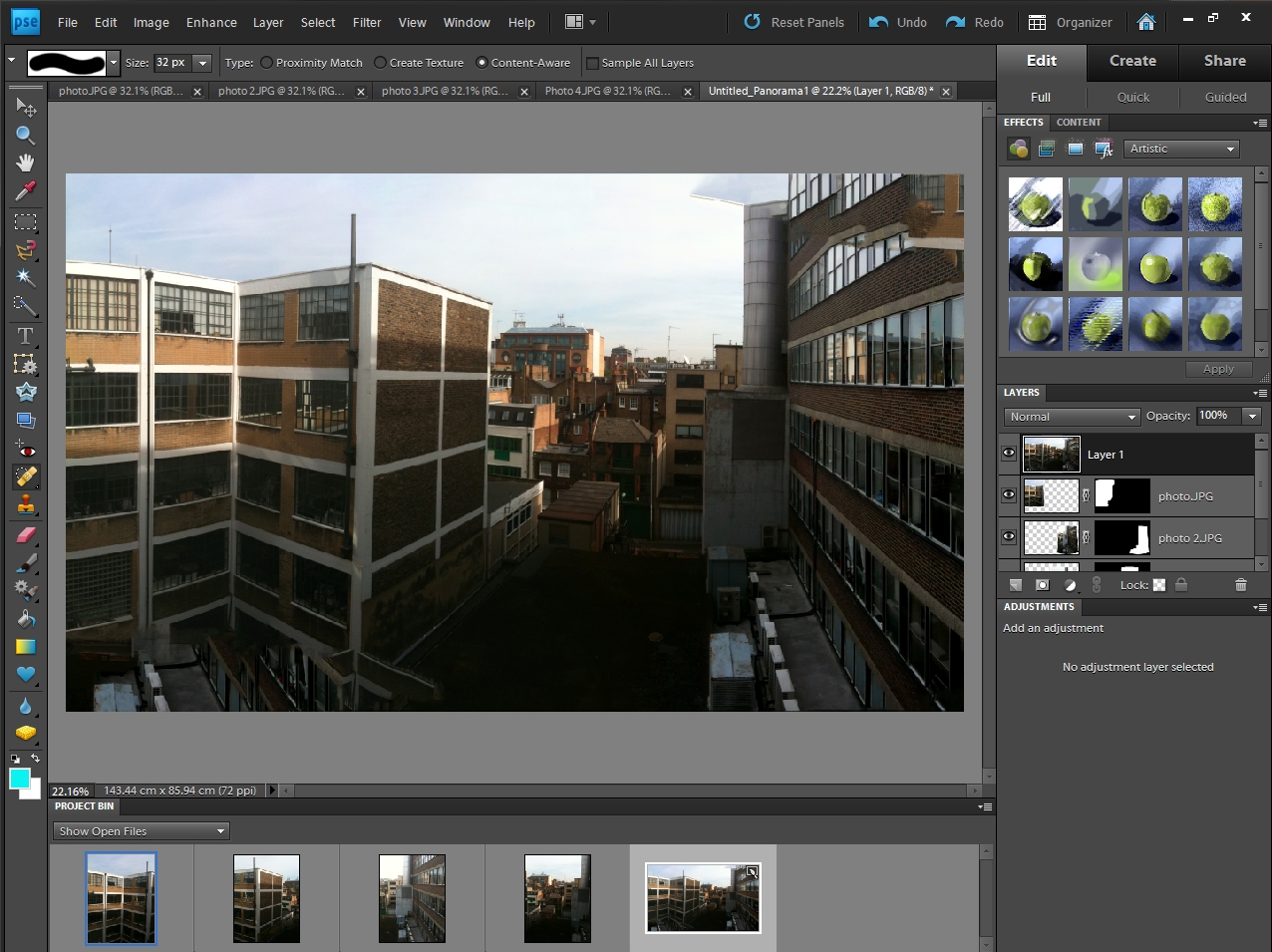
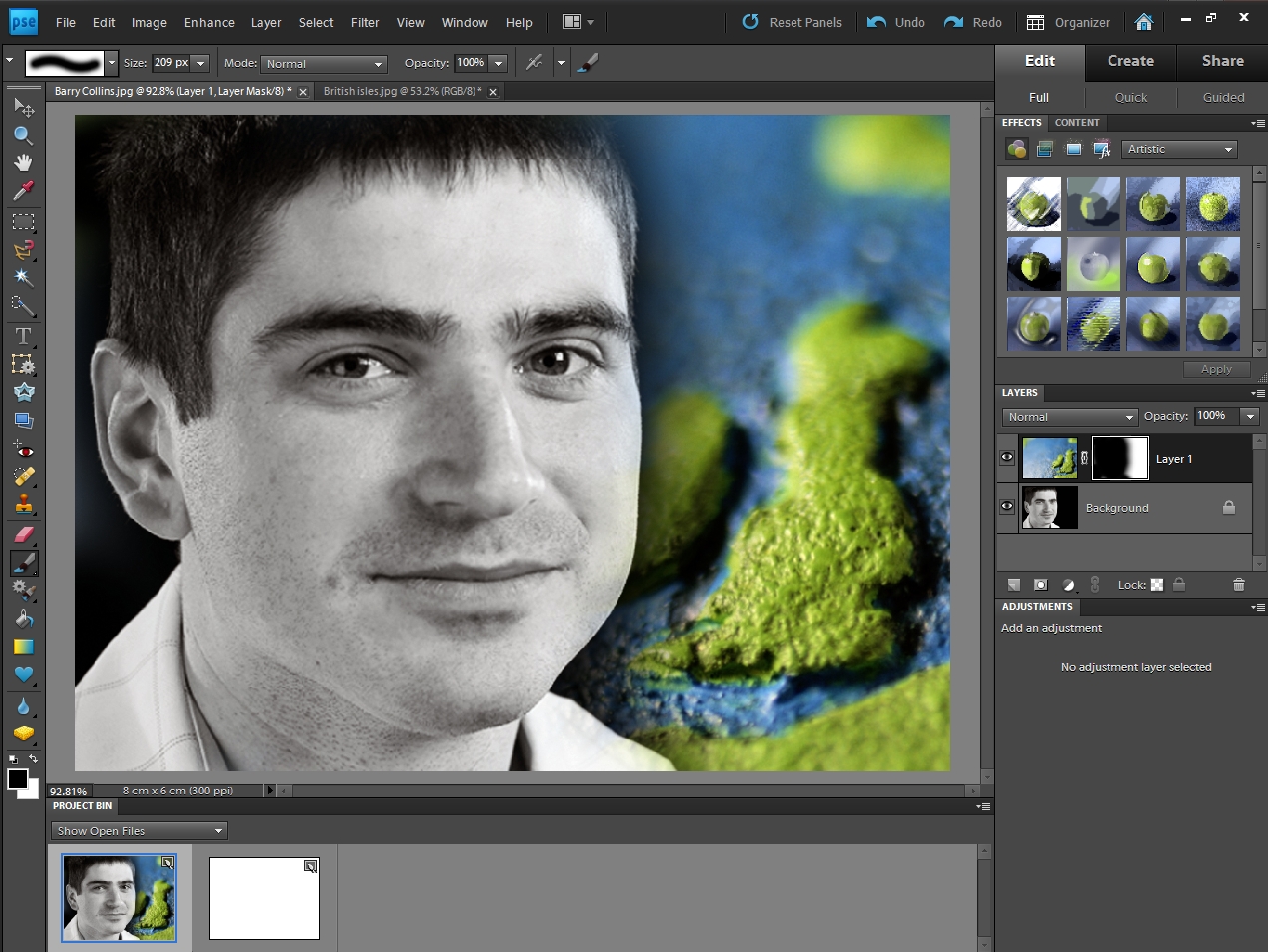
Content-aware fill isn’t the only Photoshop CS5 feature to filter down to Elements: layer masks are included in the budget suite for the first time. Masks make it possible to perform non-destructive edits on image layers; it’s thus much simpler to blend two images together, or manually merge photos for a high dynamic range (HDR) composition.
There’s no doubt masks have been a highly sought-after feature – a cottage industry has sprung up over the years with developers offering mask plugins for previous versions of Elements, so it’s good to see Adobe reacting to consumer demand.
The other new additions to the suite are high on novelty value. The photo-merge group style feature is one that will have photography purists reaching for the green Biro. It allows amateurs to apply the “style” of iconic photographers to their own work, by showing Elements a moody Lartigue portrait, for example, and asking the software to apply the photo’s tones, contrast and exposure settings to a photo of their wife.
Adobe insists none of this breaches copyright, as the software is only mimicking the style of other people’s photography, not actually stealing its content. It works well, too, as long as the photos you’re copying are of a very distinct style, although we found it added a lot of artificial noise to some of our test images, which was then difficult to remove.
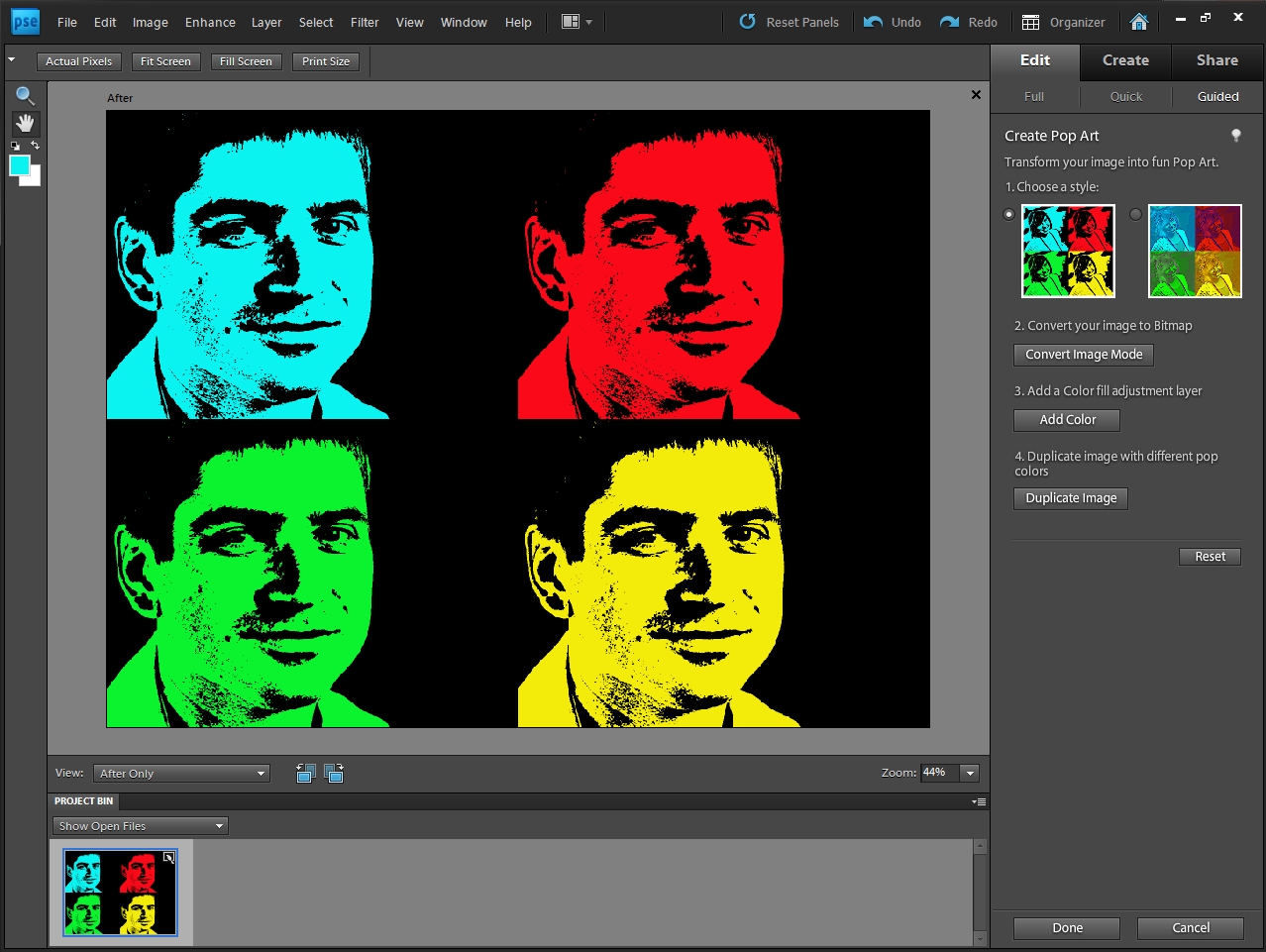
The new “fun edits” also borrow a little creative inspiration. These are an extension of Elements’ long-standing guided edits, where the software takes you step-by-step through advanced procedures. So you can now turn a portrait into a clichéd piece of Warhol Pop Art in as little as three clicks, add an artificial reflection to a landscape, or emulate the retro appeal of the Russian Lomo cameras.
The most impressive fun edit is “out of bounds”, a technique that can be used to make photos pop out of a frame – handing consumers the kind of advanced editing skills that were previously the premise of magazine designers.
Adobe has also improved one of the weakest parts of the Elements suite: the Organizer, which manages both your photo and video library, and forms the join between Photoshop Elements and its video-editing sibling, Premiere Elements. This now feels snappier, especially with libraries containing hundreds of high-res images, although the way it forces you to manage albums within the Organizer (move photos around using Windows and it can get confused) is frustrating. And for those who want to share their edited wares on social networks, there’s now seamless integration with Facebook, with Photoshop cleverly resizing photos to Facebook’s maximum resolution before uploading to avoid wasting bandwidth.
After last year’s middling upgrade, Photoshop Elements 9 puts real distance between itself and Google’s ever-improving freebie, providing both full-editing power for those who want maximum control over their photos, and helpful handholding for those who simply want to achieve results in the fastest time possible. With a reasonable discount for buyers of previous versions, it’s a compelling upgrade too.
Details | |
|---|---|
| Software subcategory | Photo editing software |
Operating system support | |
| Operating system Windows Vista supported? | yes |
| Operating system Windows XP supported? | yes |
| Operating system Linux supported? | no |
| Operating system Mac OS X supported? | yes |

Disclaimer: Some pages on this site may include an affiliate link. This does not effect our editorial in any way.