Modern multiplayer strategy games require constant tactical adaptation. In competitive matches, objectives appear at exact timestamps that can shift the balance of power without a single hero being killed. At the 20 minute mark, the Tormentor spawns to grant Aghanim’s Shard, 175 gold, and immediate map pressure.
Why the 20-Minute Tormentor Matters

The Tormentor first appears in the match at exactly 20:00, and respawns 10 minutes after being defeated. Unlike Roshan, he does not attack heroes with standard attacks, but punishes the team for reckless burst damage. His shield absorbs all damage, his Reflection ability reflects a portion of the damage taken back at nearby heroes, and The Shining gradually drains the health of all players nearby. His base shield is 3,000 HP, and every minute he gains an additional 50 HP of shield and 5 units of regeneration. As you can see, defeating him is no easy task, especially in the mid-game.
By the 20:00 mark, heroes already have their first key items, but haven’t yet built up significant power. To take down Tormentor easily, your team should have survival items. According to EGamersWorld, a team with Guardian Greaves, Pipe of Insight, or a strong healing support can take down Tormentor much more safely than a line-up that relies solely on physical DPS. So, preparations to take down this target should begin well in advance, around the 15-minute mark.
For professional lineups, Tormentor is often part of a pre-planned strategy rather than a random opportunity. If there are players in the team without Aghanim’s Shard, the item is given to one of the two heroes with the lowest net worth. This means that Tormentor automatically helps the weaker economy position. A Hard Support can buy the item on a save, for example, Guardian Greaves, and by destroying Tormentor, get the desired upgrade without spending 1400 gold.
At the same time, the opposing team loses the opportunity to gain a similar advantage in their lineup. Structured tactical thinking here mirrors how professionals optimize digital layouts or organize workflows, like learning how to synthesize customer surveys with Power Automate AI.
Tormentor Changes The Mid-Game Map
Following Patch 7.41, Tormentor is no longer a completely static point. It now changes location depending on the time of day and Roshan’s position: during the day, it is on the south-eastern side of the Radiant map, whilst at night it moves to the north-western side of the Dire map. The locations are near the teleports and close to the Lotus Pools, and the three ramps provide several routes of approach.
This has practical implications for mid-game tempo. If a team has pushed the side lane, placed an Observer Ward and is controlling the approach via the Twin Gates, the route to the Tormentor is safer. At the same time, the opponent can use Smoke of Deceit to sneak up unnoticed, so it is also recommended to place a Sentry Ward.
There is another side to this. Five heroes who have simultaneously moved to a single point on the map leave the mid lane or the opposite side lane unguarded. Therefore, a good Tormentor call should consider not only whether the team can kill it, but also what the enemy will gain whilst the team is taking down the Tormentor.
Let’s imagine the situation at 20:05. The Radiant team has collected meta items in the current patch and has a total net worth 3000 gold higher than the opponents. In this situation, Tormentor can become an extension of the economic advantage. After its death, the team receives a Shard, health regeneration through Alleviation, and the opportunity to leverage the advantage and destroy the T2 tower.
Managing complex digital configurations during quick gaming sessions requires clear oversight, similar to knowing how to find your IP address on Windows when troubleshooting network routing issues.
How Teams Should Prepare For The Fight
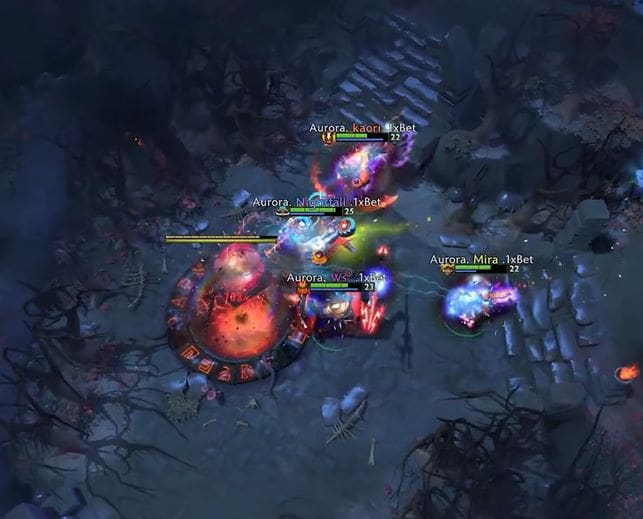
The most common mistake during the Tormentor fight is to rely solely on damage output. Tormentor has 30% base damage reflection, which increases by 1.5% every minute, and his ‘The Shining’ ability deals area damage after a target takes damage. Therefore, the team absolutely must have a ‘save’, and a hero with high DPS isn’t always the best choice to lead the attack.
The team needs at least three things: regeneration, a hero with sufficient sustained damage, and map control. In a standard ranked Dota 2 match, four or five heroes push towards Tormentor, whilst one player remains in the lane only once wave control has already created a safe situation. In this case, resource management is more important than speed. If the team loses a hero for the sake of a Shard, the economic value of the objective virtually disappears.
Before 20:00, supports should check the Observer Ward, Smoke of Deceit, and the availability of teleports. The carry should continue farming and only join in taking down this objective once the team has decided on a strategy.
Meanwhile, position 3 or 4 can clear vision near the approaches in advance. If the enemy has shown two or more heroes on the opposite lane, this is often the best moment for the Tormentor. Organizing these detailed setups requires precision, comparable to understanding how to talk to AI: the guide to better LLM prompts.
From Free Shard To Real Map Pressure
Killing the Tormentor and simply heading back to your own forests is the worst way to capitalise on the advantage you’ve gained. If a team has spent 20 seconds moving, 10 seconds fighting, and another 5 seconds recovering, they must convert that time into a tangible result. The best course of action is to try to destroy a tower, and at this stage of the game it is usually a T2 tower, or to try to hunt down an enemy hero in the jungle.
The combination of Tormentor and the next wave of creeps works particularly well. Whilst the team gains Alleviation and regenerates HP, the mid laner can push the wave, and the support can set up vision. In such a scenario, a free Aghanim’s Shard significantly boosts the team’s mid-game potential.
It is also important who actually gets the Shard. As mentioned above, it goes to one of the two players with the lowest net worth on the team. If it goes to a hero with a significant ability upgrade, the team value of the reward can exceed 1400 gold.
In professional Dota 2, teams take the destruction of the Tormentor seriously. Building the right strategy for this objective is one of the most important parts of tactical preparation in the mid game and transition to the late game. Of course, not all teams take the Tormentor exactly at the 20-minute mark, which is noticeable at The International 2026, but it is highly likely that a team will take it within the 20 to 30 minute range.
Therefore, to create accurate match predictions, Tormentor kill statistics should be considered along with tower damage, Roshan control, and net worth difference. Fine-tuning competitive play styles is akin to knowing how to change your IP address or adapting tools like Snowchat AI for daily workspaces to maintain peak operational performance.
Conclusion
In this article, you’ve learnt everything about Tormentor, including his timings, rewards, and strategies. Killing him doesn’t automatically win the match, but it creates a specific window of opportunity to change the pace of the game.
However, it’s important not to forget the right approach: a good call isn’t about killing Tormentor himself, but about the next move. Placing a ward, destroying a tower or taking down an enemy hero are often just as important. In ranked Dota 2, this is particularly important, as taking down Tormentor allows you to build up good momentum and increase your chances of victory.
Related Posts
 What Is the Best AI for Game Icons?
 Is Purple Leaf AI Worth It for Your AEO/GEO and SEO Game?
 7 Ways that AI Is Being Used in Minecraft
 Best VPNs for Minecraft to Bypass the IP Ban
 Best Minecraft Skin AI Generator
 3 Fun AI Minecraft Builder Tools
 Minecraft GPT – What You Need to Know About the AI-Powered Minecraft Guide
 3 Cool Apps You Can Use to Create Minecraft Avatars With AI
 Best Free AI Image Generator

Disclaimer: Some pages on this site may include an affiliate link. This does not effect our editorial in any way.