Camera technology has changed considerably over the past decade. Smartphones now record detailed 4K videos, home security cameras capture footage in low light, and compact devices offer image quality that once required expensive equipment.
Much of this progress comes from improvements in camera sensors. These small electronic components determine how light is captured and converted into digital images, affecting video sharpness, color accuracy, low-light performance, and detail preservation.
Modern consumer electronics increasingly combine advanced CMOS sensors, high dynamic range (HDR), image processing, and multiple cameras to improve video recording. Understanding how these technologies work helps consumers make better decisions when choosing smartphones, security cameras, and webcams.
What Is a Camera Sensor and How Does It Work?
A camera sensor is an electronic component that converts incoming light into electrical signals, which are processed to create digital photographs or videos. When light passes through a lens, it reaches millions of light-sensitive elements called pixels.
The camera’s image processor then converts this information into a digital image, applying noise reduction, color correction, and sharpening. Most modern consumer cameras use complementary metal-oxide-semiconductor (CMOS) sensors because they offer practical advantages:
- Low power consumption: Suitable for battery-powered smartphones and portable electronics.
- Fast image processing: Supports high-resolution video and rapid image capture.
- Compact construction: Allows manufacturers to fit cameras into smaller devices.
- Integrated electronics: Enables efficient sensor readout and image processing.
Although sensor resolution matters, recorded video quality also depends on pixel size, lens quality, lighting conditions, and image processing. A camera with more megapixels does not automatically produce better footage than one with a lower resolution.
How Do Modern CMOS Sensors Improve Video Quality?

Modern CMOS sensors improve video quality by capturing light more efficiently, reducing image noise, and supporting faster image readout. One major development is back-illuminated sensor technology, commonly called BSI.
Traditional front-illuminated sensors have wiring structures that partially obstruct incoming light. BSI designs position these structures behind the light-sensitive layer, allowing more light to reach the pixels and improving sensitivity in smaller sensors.
Advanced sensors also support key imaging technologies:
- High dynamic range: Preserves more detail in bright and dark areas.
- Improved noise reduction: Helps produce cleaner images in challenging lighting.
- Faster readout: Reduces motion-related recording artifacts like rolling shutter distortion.
- Higher sensitivity: Improves the ability to capture usable footage in dim environments.
For example, Sony’s STARVIS 2 technology uses back-illuminated CMOS designs developed for high-sensitivity imaging. The Sony IMX678 is a 1/1.8-type sensor with approximately 8.4 million effective pixels, supporting 4K recording and multiple HDR readout modes for continuous-video applications.
Why Is Sensor Size Important for Video Recording?
Sensor size affects how much light a camera can collect, making it an important factor in image quality. Larger sensors generally have more surface area available for capturing light, which improves low-light performance and reduces visible grain.
However, sensor size alone does not determine recording quality. Pixel design, lens aperture, exposure settings, and image processing all influence the final result.
For example, a smartphone often pairs a large main sensor with smaller sensors for ultrawide or telephoto recording. When comparing consumer cameras, buyers should weigh sensor size alongside real-world video samples rather than relying exclusively on megapixel counts.
How Does HDR Improve Video Recording in Difficult Lighting?
High dynamic range improves video recording by preserving information in scenes containing both bright highlights and dark shadows. Without effective HDR processing, a person standing near a bright window might appear silhouetted against a completely white background.
Depending on the camera, HDR captures information at different exposure levels or uses specialized sensor readout techniques, combining them into a balanced picture. HDR is particularly useful for:
- Indoor recording near bright windows.
- Outdoor scenes with harsh midday sunlight.
- Security footage containing bright building entrances.
- Video captured during sunrise or sunset.
- Scenes with rapidly changing lighting conditions.
However, HDR performance varies between devices, and poor implementation can introduce motion artifacts or unnatural contrast. Consumers should evaluate sample footage instead of assuming every HDR-enabled camera performs equally well.
How Does Multi-Camera Technology Improve Video Recording?
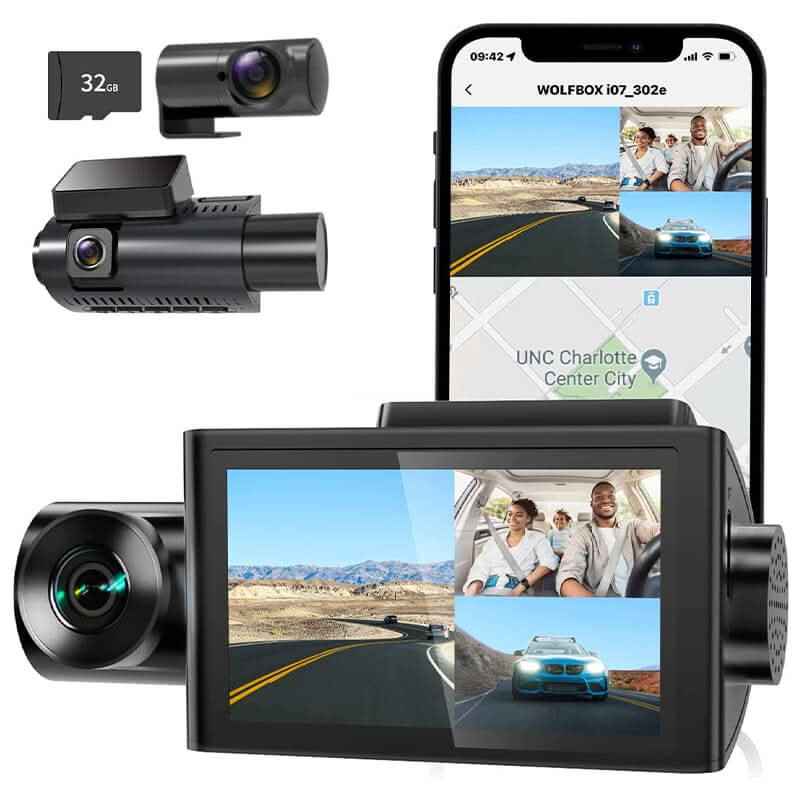
Multi-camera technology improves video recording by allowing a device to capture different perspectives, focal lengths, or viewing areas simultaneously. Smartphones combine wide, ultrawide, and telephoto lenses for framing flexibility, while security systems monitor separate entryways at once.
Vehicle recording systems use a similar approach. A 3 channel dash cam can record three distinct perspectives, such as the road ahead, the rear of a vehicle, and either its interior or an additional exterior angle.
Multi-sensor optical arrays also form the backbone of modern transportation tech, similar to how autonomous platforms covered in how do Google’s driverless cars work rely on synchronized camera feeds to perceive surrounding road conditions.
The main advantage is expanded visual coverage without relying on a single lens to capture everything. However, running multiple cameras simultaneously also increases storage requirements, processing demands, and installation complexity.
How Are Advanced Camera Sensors Used in Everyday Consumer Devices?
Advanced camera sensors appear across smartphones, webcams, security cameras, action cameras, and vehicle recording systems. Although these devices serve different purposes, they often rely on similar core imaging technologies.
Smartphones and Portable Cameras
Smartphones combine compact CMOS sensors with computational photography to improve exposure, color accuracy, stabilization, and low-light recording. Modern image processors analyze individual video frames in real time to compensate for challenging conditions.
Home Security Cameras
Security cameras prioritize continuous recording, wide viewing angles, and reliable low-light performance. Many use high-sensitivity sensors alongside infrared illumination to capture clear activity after dark.
Multi-Camera Recording Systems
Specialized recording systems show how distinct sensors work together inside one consumer product. For example, the WOLFBOX G900TriPro Bumper Version combines a 4K front camera using Sony’s STARVIS 2 IMX678 sensor with a 2.5K rear camera using the OmniVision OS04J10 sensor, plus a 1080p IP67-rated exterior bumper camera.
The WOLFBOX G900TriPro Cabin Version uses the same 4K front and 2.5K rear configuration but swaps the bumper unit for a 1080p interior camera with four infrared illuminators. Both versions include a 12-inch IPS touchscreen, 5.8GHz Wi-Fi, built-in GPS, and voice control.
As automotive camera systems grow smarter, similar multi-sensor configurations are shaping real-world mobility trials like the driverless cars GATEway project in Greenwich, showing how tailored sensor placements solve specific visual monitoring needs.
What Is the Difference Between 4K Resolution and Sensor Quality?
4K resolution describes the number of pixels in a recorded image, while sensor quality determines how effectively those pixels capture useful visual information. Standard 4K UHD video contains 3840 × 2160 pixels (about 8.3 million pixels per frame), offering more potential detail than 1080p video.
However, higher resolution does not guarantee better footage. A 4K camera with poor low-light sensitivity often produces noisier video than a well-engineered 1080p camera under identical dim lighting.
Other critical factors include:
- Lens quality: Affects edge-to-edge sharpness and optical distortion.
- Bitrate: Determines how much visual data is preserved during video compression.
- Frame rate: Influences motion smoothness during fast action.
- Dynamic range: Determines how well bright highlights and deep shadows are captured.
- Image processing: Affects color accuracy, fine detail, and digital noise reduction.
Why Do Some Cameras Perform Better in Low Light?
Low-light performance depends on how efficiently a camera captures and processes scarce ambient light. When brightness drops, cameras increase electronic gain to brighten the frame, which unfortunately amplifies digital grain.
Advanced sensors combat this through larger pixel wells, back-illuminated structures, and smarter signal processing. Some devices also use infrared illumination to record scenes where visible light is absent, which is common in home security cameras and baby monitors.
Because infrared recording typically produces monochrome footage rather than full-color video, buyers should match low-light hardware to their intended environment. A smartphone built for vibrant nighttime street videos requires very different sensor tuning than an indoor security camera.
What Should Consumers Look for When Choosing a Camera-Based Device?
Consumers should evaluate camera technology based on how and where they plan to record video. Keep these essential specifications in mind when comparing devices:
- Sensor type and size: Larger or back-illuminated sensors improve clarity under difficult lighting conditions.
- Video resolution: Higher resolutions capture finer detail but demand extra storage space and processing power.
- HDR capability: Essential for scenes mixing bright sunlight or windows with darker indoor areas.
- Frame rate: Higher frame rates deliver smoother motion during fast-moving action.
- Connectivity: Wi-Fi, Bluetooth, or app integration simplifies footage transfers and remote device management.
- Storage and compression: Efficient video encoding preserves recording quality without creating unmanageably large files.
Consumers should also check firmware update support, privacy controls, and how easily recorded clips can be backed up or exported. Studying how optical tracking evolves in complex fields like driverless cars of the future highlights why pairing reliable sensors with dependable software updates matters so much.
Are More Advanced Camera Sensors Worth Paying For?
Advanced camera sensors are worth considering when improved recording quality, low-light clarity, or multi-angle coverage delivers a practical daily benefit. For casual video calls or occasional daytime clips, a standard budget camera already provides sufficient quality.
However, people who regularly film in dim environments, capture fast-moving subjects, or rely on clear security and road footage gain measurable value from upgraded sensors. A well-designed system balances resolution, sensitivity, dynamic range, and processing speed, helping you choose hardware based on real recording needs rather than marketing numbers.
Related Posts
 What Does Lumen5 Improve on and Bring to Video Creation?
 Entropik AI Review: Can It Really Measure Interviewee and Consumer Feelings?
 Can Copilot Tasks Improve Productivity for Busy Creators?
 What Is Dating Killer AI – The AI-Powered Way to Improve Your Online Dating
 4 Things BrandSocial Can Do to Improve Your Social Media Profiles
 How Does Page Pulse Improve Site Analytics?
 How to Create YouTube Shorts From Existing Video Using Reap.Video
 Best AI YouTube Video Summarizer
 How to Use the Sora AI Video Generator

Disclaimer: Some pages on this site may include an affiliate link. This does not effect our editorial in any way.